
Effectively Shooting Open Field Gobblers
Posted by Heath Wood on Apr 24th 2024
Spring turkey hunting presents an exhilarating challenge for hunters seeking the ultimate thrill of the chase. Yet, one of this pursuit's most formidable hurdles is coaxing a gobbler into close shooting range. Whether armed with a bow or shotgun, the requirement of bringing the bird within fifty yards or closer for an ethical shot cannot be overstated. But what happens when a wily tom lingers in a field's openness, seemingly out of reach? How does one engineer the circumstances to lure him close enough for a decisive shot? Let's explore the essential strategies and tactics for hunting open-field gobblers.
Understanding the Terrain
Firstly, comprehending why turkeys favor open fields or expansive areas is crucial. Recently, I have encountered a particular gobbler on multiple hunts. Each time, the Wiley Tom is directly in the middle of a field, leaving no chance of closing the distance without getting busted by his keen eyesight.
On the first encounter, he saw me before I saw him. The second time around, I approached the area much more cautiously, with a different game plan to try to close the distance for a shot opportunity; still, I got pegged when I peeked over the hill faster than I should have. On my most recent attempt, I arrived mid-day in hopes the mature tom would not be in his usual location. Even more aware of my approach, I used my binoculars to spot the long-bearded tom feeding along the top of the hillside. Again, in the open, it is hard to get closer. This time, I went out of the way to stay below the skyline, hoping to rise over the hill like a periscope on a submarine. When I peeped over the hill, nothing; the gobbler had moved out of the area.
These open spaces provide ample room for strutting, a spectacle aimed at wooing hens during mating season. Moreover, the lack of obstructive cover offers turkeys enhanced visibility, allowing them to detect potential threats more efficiently. Hence, no matter which way I approached him, he could see me before I was close enough for a shot.
I have had open-field obstacles interfere with my hunting success before. With two weeks left in my home state of Missouri’s spring turkey season, I shall revert to the proven tactics that have helped many turkey hunters deal with the same challenge.
Tactics for Drawing Gobblers In
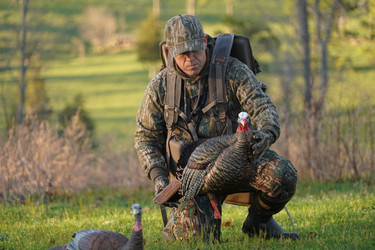
To counter open fields' challenges, hunters must employ various tactics tailored to entice turkeys within range. One effective method involves the strategic placement of decoys. Lifelike decoys, such as my Avian X HDR Jake, HDR Hen, and one of my all-time favorite decoys, the LCD Laydown Hen, particularly those mimicking receptive hens or dominant toms, can serve as irresistible magnets, drawing in curious gobblers within shooting distance. Positioning these decoys strategically, considering the line of sight, can significantly enhance their allure. One of the biggest mistakes many turkey hunters make when hunting open areas is not having a visual for approaching turkeys to see. A mature tom, who is cautious about approaching open areas, frequently will “hang up” on the edge of the field until finally letting their fear lead them back into cover.
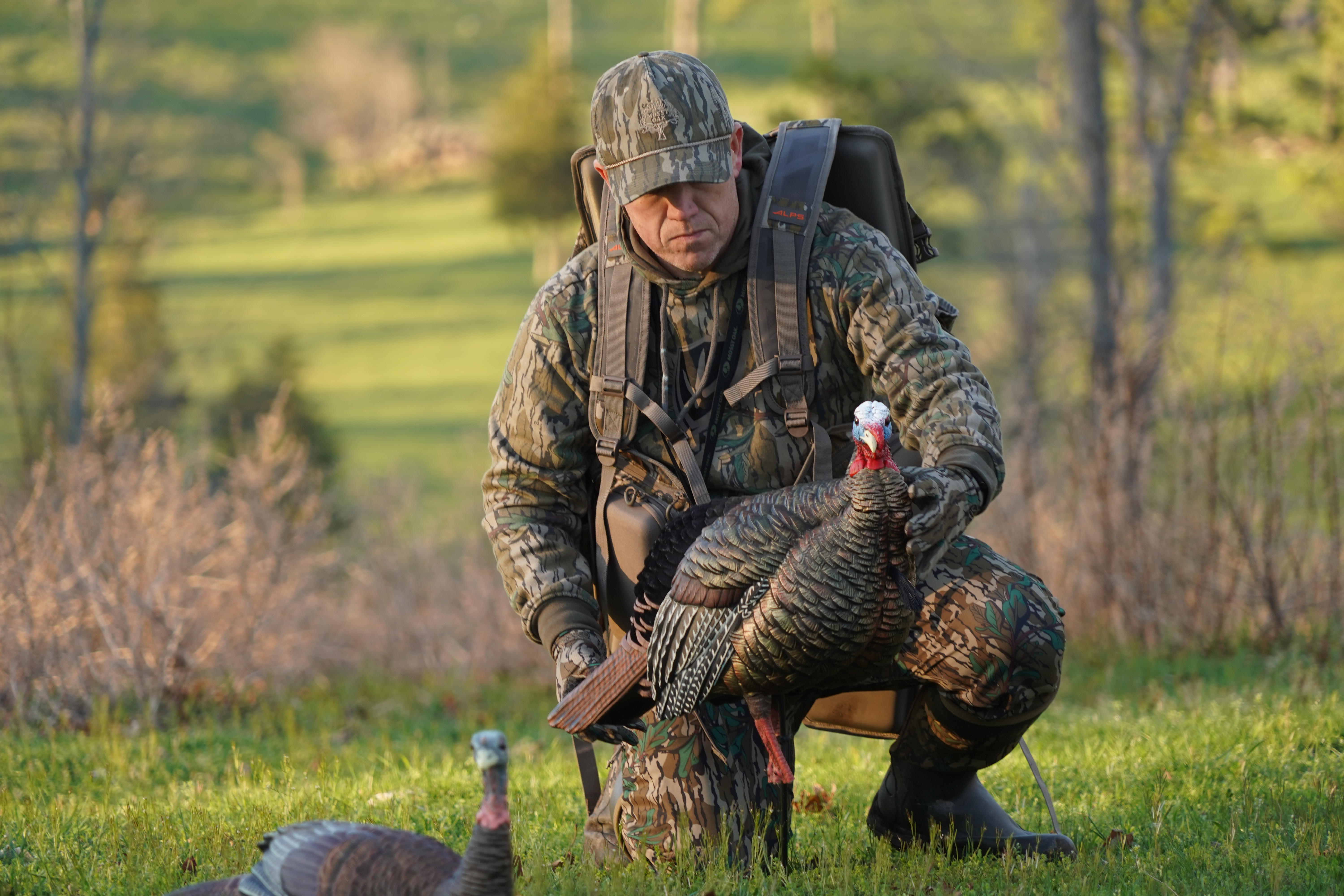
Additionally, utilizing a ground blind, such as the Hawk Down & Out Blind, proves invaluable in concealing the hunter's presence and minimizing the risk of spooking wary turkeys. Patiently awaiting the arrival of gobblers while nestled within a well-camouflaged blind offers a stealthy approach, increasing the likelihood of a successful shot opportunity.
Navigating Challenges
Accurately judging yardage amidst the vast expanse of open terrain is another challenge when hunting open-field gobblers. In such scenarios, employing range-finding equipment or pre-marking distances to prominent landmarks can aid in making precise shots. Moreover, turkeys' keen eyesight presents a constant threat, making it imperative that hunters exercise utmost caution in their approach. Employing natural terrain features, such as dips and ridges, to conceal movements and minimize visibility can tip the scales in the hunter's favor.
Furthermore, understanding turkeys' behavioral patterns and anticipating their movements is paramount. Researching and recording their roosting sites, feeding grounds, and preferred strutting areas on a GPS hunting app such as Hunt Stand enables hunters to position themselves strategically, increasing the likelihood of encountering gobblers in open fields.
Effectively shooting open-field gobblers demands strategic planning, practice, patience, and stealth. When using a bow, having a well-lit sight such as the TruGlo 3-Pin Veros is crucial, while the Magnum Gobble-Dot Pro open sight or the Gobbler Stopper turkey sight for a shotgun allows hunters to see a clear target when shooting into an open area when distance is sometimes challenging. Plus, practicing before the season is essential to ensure an accurate shot during the hunt.
By employing decoys, utilizing ground blinds, and navigating the challenges posed by open terrains, hunters can enhance their chances of success in this exhilarating pursuit. In the thrilling game of turkey hunting, adaptability and persistence are key.