
Finding and Bow Hunting Afternoon Gobblers
Posted by Heath Wood on Apr 5th 2023
After what seemed to be only a few minutes of sitting in the Muddy ground blind, the first turkey of the afternoon made an appearance in the freshly greened food plot. When a lone hen began slowly feeding in our direction, I could hear her soft yelps and clucks and decided to make my first attempt at calling. After reaching into my H.S. Strut Magnetic Mouth Call Carrying Case, I slowly put a diaphragm call into my mouth and softly yelped to respond to the hen's afternoon vocabulary. In textbook fashion, she looked our way and answered back with a slightly more aggressive yelp. The hen and I called to one another for ten minutes by cutting and yelping, which had her fired up, and by the sound of the distance gobbling, it was beginning to snag the attention of a couple of longbeards as well.
I have never gotten much of an opportunity to hunt in the afternoons due to my home state's regulation of each day's shooting hours ending at 1:00 p.m. However, when youth hunting, as we were doing when the lone hen had begun to create attention, hunting is permitted all day. I have heard many hunters state that late afternoon and evening turkeys can be less vocal than when hunting in the morning. As our afternoon hunt progressed, that was not the case. Because the hen responded back and forth to my calling, a small flock of four toms and six hens quickly closed the distance and created quite the commotion of gobbling, yelping, and cutting. Soon, I whispered to the young boy who was that evening's designated shooter to prepare for the shot. After two of the four toms attacked our Avian X decoys, the boy successfully shot and made a hunting memory that he and I will never forget.
Turkey hunting during the afternoon and late evenings doesn’t get the credit it deserves due to many states prohibiting it after a designated time. Those who hunt mornings experience the thrill of turkeys flying off the roost and successful harvests. Yet, evening hunting can also be an excellent time to score on a mature gobbler. Even though their patterns differ from the first few hours of the morning, spring turkeys' afternoon and evening routines can be ideal for archery hunters seeking to get close range to a gobbler when the hype of breeding season seems to cease during the last hours of the day.
Afternoon Feeding
As with a mature buck during the fall rut, the increased attention on breeding can cause gobblers to spend much of their mornings chasing and pursuing hens. In the afternoons, many hens return to their nest to lay or sit on their eggs for a few hours. During this time, hunters often find a tom out in fields trying to grab a few bites of food before one last attempt at mating a hen before going to the roost later in the evening.
When a tom is alone for an afternoon snack, it provides an excellent opportunity for bowhunters to sneak around, get into proper position, and attempt to call him into archery range. Often, bowhunters can ease to field edges or open areas with a pair of binoculars and locate toms feeding in the green grass. Once a tom is found, the hunter can use the terrain to their advantage and get into a position to begin calling. Because the gobbler is often by himself, he is eager to respond to a hen and reacts more quickly than in the mornings when several other hens and gobblers are often around.
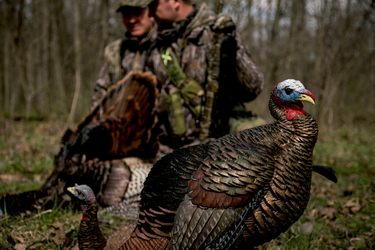
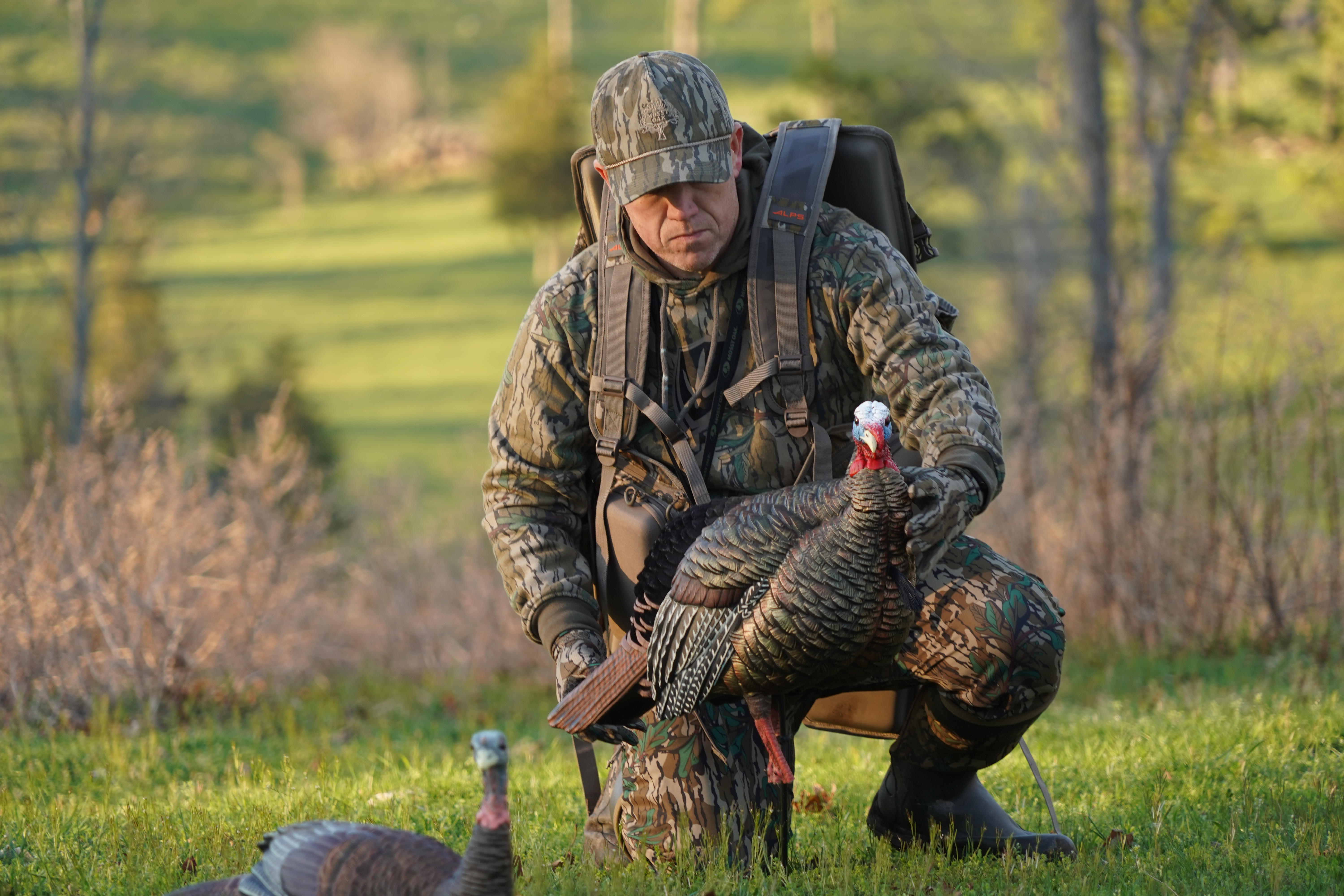
To help bring the tom into the archery range, the hunter should use a feeding or upright hen decoy and a jake decoy. The decoy combo provides the perfect distraction for the hunter hidden in the shadows to draw their bow and make a successful shot. The jake and hen combo creates the scene of a hen who has been approached by an immature jake trying to steal away the hen while the toms are preoccupied. When a nearby gobbler sees a jake trying to steal away his hen, he responds quickly, ready to fight.
Waiting Near Roost Areas
As with the youth hunt, the other go-to tactic for afternoon and evening turkey hunting is having a ground blind such as the Muddy Outdoors VS360 Blind that features the popular spring turkey hunting camouflage pattern, Mossy Oak Obsession.
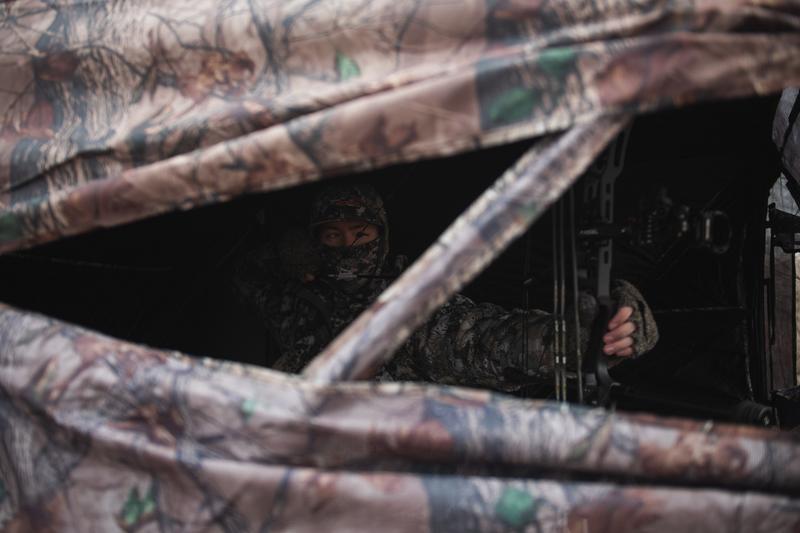
Wild turkeys often roost in the same areas each night unless spooked from the area moments before time to fly up. When a well-used roost area has been found, going near the area days before hunting and setting up a ground blind can be highly effective.
Although the hunter may have to sit in the blind patiently until turkeys appear, getting into the blind during the mid-day prevents any nearby turkeys from spooking out of the area. As the evening progresses, turkeys begin their feeding routine, and toms chase hens until it is time to fly up to the roost. It is essential to have the blind on the often-traveled route to the roost and not directly at the roost. If the blind location is too close to roosting turkeys, the risk of spooking away turkeys when leaving the area increases.
Because the Muddy ground blinds are already set up in suitable locations, hunters can have their decoys in place and have the extra concealment of a ground blind to draw their bow and make a successful shot.