DIALING-IN FOR CROSSBOW ACCURACY AND PENETRATION
Feb 18th 2021
It's taken a rather long time for vertical-bow hunters to get back to the realization that speed isn't everything. In fact, speed is just a means to an end, and that "end" is penetration. Sure, a faster bow is always welcome because arrow speed directly correlates with downrange energy and, thus, penetration. The point that has been relearned, however, is that arrow speed, by itself, means nothing if the arrow is so light that it gets knocked off course with a slight puff of wind (accuracy) or if it doesn't have enough heft to punch through a large animal (penetration).
Well, that same concept applies to the crossbow world as well...maybe even more so. Crossbow arrows—especially carbons—are light and short, making them inherently less stable than heavier, longer shafts; They absorb less of a crossbow's energy potential, which translates to reduced downrange kinetic energy; Finally, lighter arrows promote increased crossbow noise and vibration.
With the vertical bow shooter's attention now rightly focused on the benefits of heavier hunting shafts and ensuring a proper FOC (front of center) weight distribution for more stable flight patterns, smart crossbow hunters are also tuning in, preferring arrows that are heavier than conventional out-of-the-box carbons and leaning towards 125-grain and heavier broadheads or adding insert weights to bump up FOC percentages—all in the name of delivering more consistent point-of-impact and greater penetration.
Good stuff, to be sure, but in the doing, there is an unbalanced variable that must be addressed.
Most "kit" crossbows include scopes that are pre-calibrated for arrow drop. We're talking about scopes with reticles featuring subtensions that provide aiming references for distances typically ranging from 10 or 20 to 50 or 60 yards. These subtensions take into consideration the two key factors of arrow trajectory—bow speed (or velocity) and arrow weight. That's all well and good if the reticle's subtensions are correctly calibrated and the hunter makes no changes that affect bow speed and arrow weight. If, however, the crossbow hunter decides to enhance accuracy and penetration by moving to a heavier arrow/broadhead combination, then arrow velocity and the arrow's trajectory both drop and the scope is no longer calibrated to provide point of impact across the reticle's yardage subtensions.
Now what do you do?
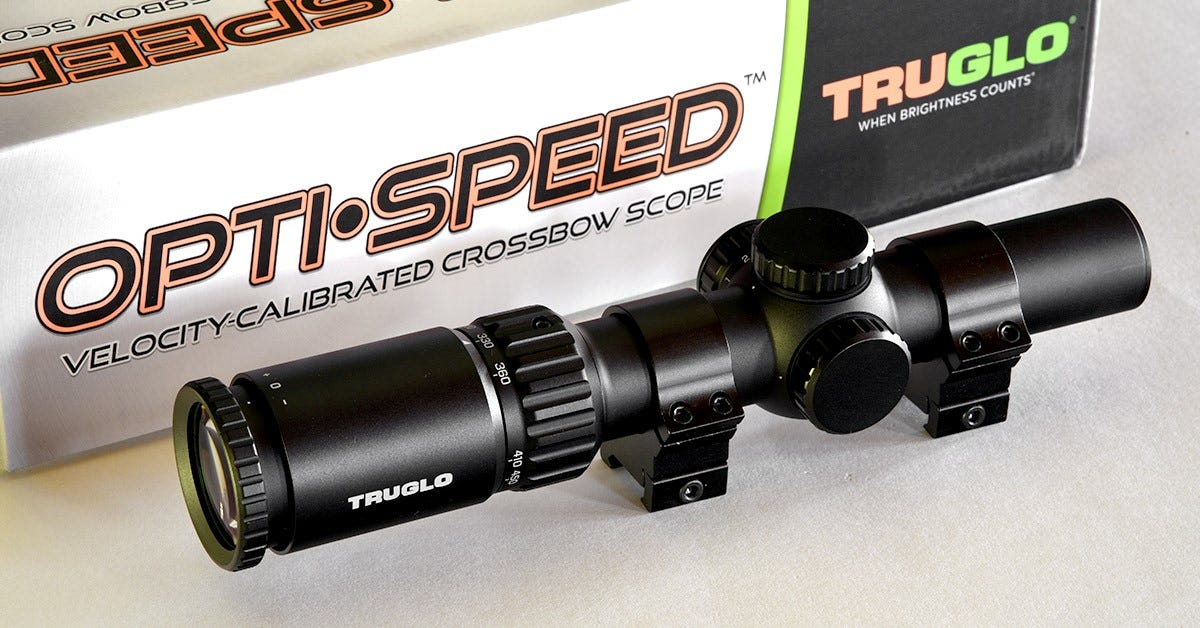
Variable-speed, or velocity-calibrated, crossbow scopes such as the Opti•Speed from TRUGLO, Inc. allow precise adjustment for variations in crossbow velocity and arrow weight—an important factor when choosing heavier hunting arrows for maximum penetration and increased FOC for improved arrow stability.
This is where "variable-speed" crossbow scopes come into play. Variable-speed or speed-calibrated crossbow scopes are designed to allow the shooter to fine-tune point of impact to match crossbow and arrow weight combinations across the functional shooting range. This is accomplished by using a second focal plane scope.
Second focal plane scopes have their reticle placed toward the rear of the erector. With this system, as the scope's magnification increases, the size of the reticle stays the same. In effect, the point of impact of the reticle subtensions changes with the change in magnification. Crossbow shooters take advantage of this by finding the precise magnification, or "speed setting," that places the reticle subtensions at the arrow's point of impact across the typical hunting range designations (i.e. 20, 30, and 40 yards).
As you can see, variable-speed crossbow scopes offer the advantage of adjusting for arrow drop based on changes in arrow weight. They also have a portability factor, meaning that they are not crossbow- or speed-specific. If you happen to buy a new crossbow that, for example, shoots 60 feet per second faster than your current model, the variable-speed scope can be installed and precisely adjusted for your new, faster crossbow. And, of course, any time you change arrow weight, the variable-speed scope can be adjusted accordingly.
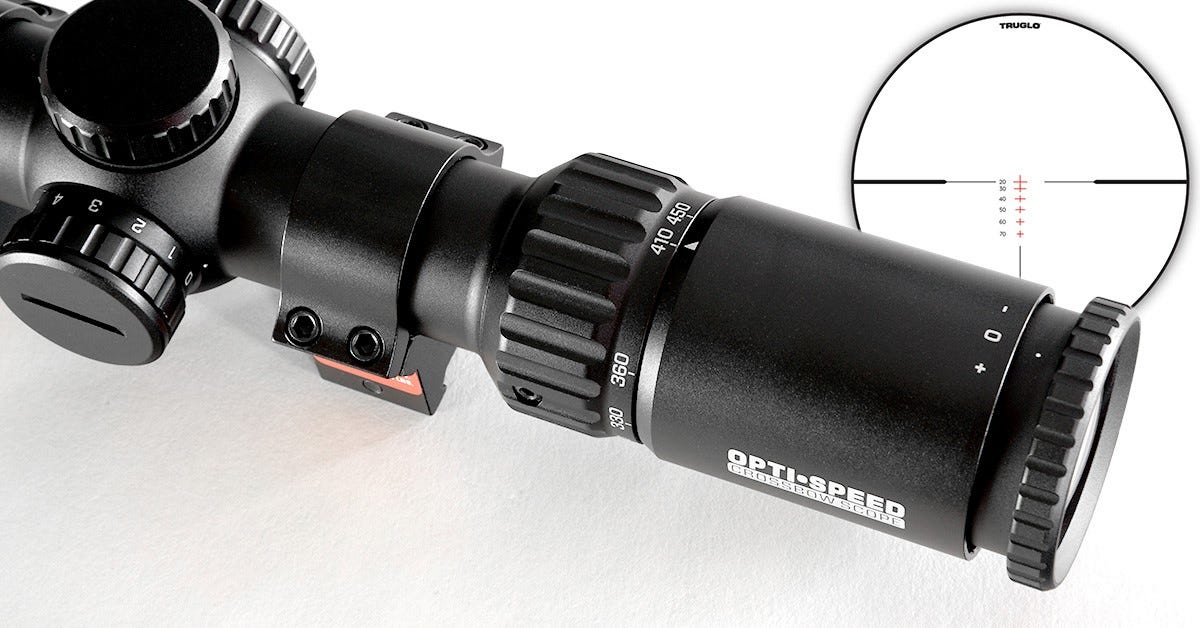
The TRUGLO Opti•Speed uses a second focal plane reticle that remains the same size as speed/magnification increases to accommodate a range of ballistic drop compensation for crossbows with speeds from 215 to 450 fps.
Variable-speed crossbow scopes come with speeds in fps denoted on the magnification ring (as opposed to magnification power in traditional scopes). These speed denotations are general guidelines to match your bow's velocity potential. Since most crossbow manufacturers rate their bows at speeds utilizing rather lightweight arrows, know that the rated speed of your crossbow is probably less than the speed of your hunting arrow setup. This will be especially true if you are intentionally shooting heavier arrows and broadheads.
To start the sight-in process, you can go to an archery pro shop and have your hunting arrow speed checked with a chronograph, but it is really unnecessary. Rather, start by setting the speed rating on the magnification ring at or below your crossbow's factory-stated speed rating and zero the scope for 20 yards using the scope's windage and elevation turrets. Twenty yards is the starting point because this point-of-impact (POI) will not change regardless of the scope's magnification.
Once your scope is zeroed for 20 yards, move on to 30 yards, using the 30-yard subtension for your POI reference. If your arrow shoots high, you'll need to increase the speed/magnification setting (do not make this adjustment by changing the windage or elevation settings); if the POI is too low, then lower the speed/magnification setting. Keep making fine-tune adjustments to the speed/magnification setting until the 30-yard subtension aligns with your arrow's POI. Once your 30-yard zero is established, move on to 40 yards and repeat the process, if necessary. You should find, however, that your POI at 40 yards may need only minor adjustment. Test again at 50 yards, if you plan to shoot at that distance (although we don't recommend it for big game hunting).
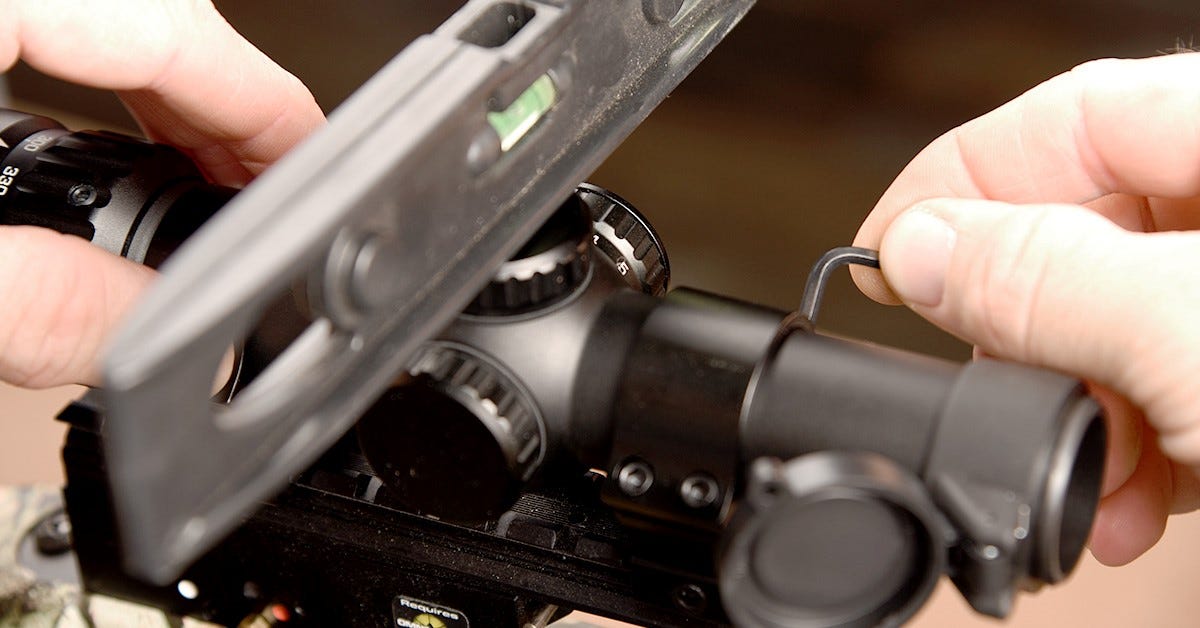
Although most crossbows come with pre-installed scopes, adding a new scope to your crossbow follows the same process as adding a scope to a rifle. Set the crossbow level, install the mounts, adjust the scope position for proper eye relief, level the scope relative to the crossbow, and secure.
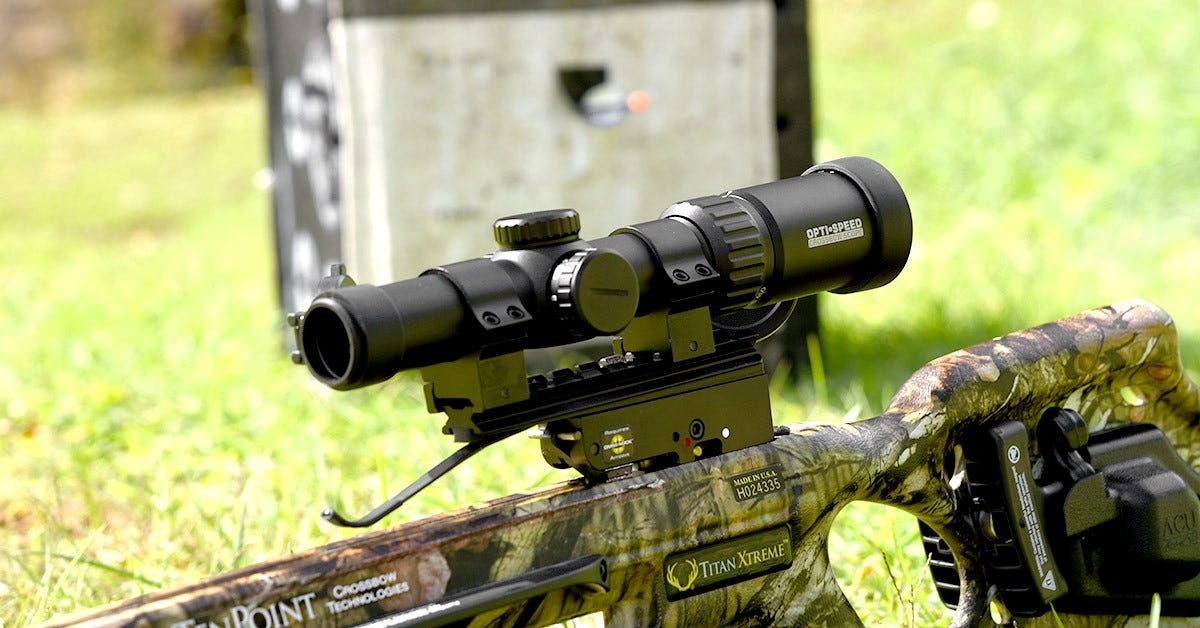
I recently installed the new Opti•Speed velocity-calibrated crossbow scope from TRUGLO, Inc. on my veteran Titan Xtreme, choosing this model because I've had good experiences with the performance-to-cost ratio of TRUGLO optics on some of my tactical firearms.
The Opti•Speed features a reticle with holdover subtensions for 30, 40, 50, 60, and 70 yards. As with all second focal plane optics, this one maintains the reticle scale while magnifying the target, and it is designed for bows with speeds ranging from 215 to 450 fps. The unit is built on a sturdy, black-anodized 30mm aluminum tube chassis that is nitrogen gas-filled to ensure it remains waterproof and fog-proof. All lenses are fully multi-coated and exhibit remarkable clarity, brightness, and color fidelity, which is great for hunting in gloomy, low-light conditions. Speaking of light, the Opti•Speed's glass-etched reticle illuminates via a side-mounted rheostat dial that features 11 lighting levels. The scope comes with 30mm Weaver-style rings, offering easy mounting to any Picatinny rail.
After installing the Opti•Speed, it took only a few shots to zero the crossbow at 20 yards. Since the Titan Xtreme had a factory fps rating of 333 with light carbon arrows, I set the scope's speed/magnification setting to 310 to account for my heavier XX75s. The POI at 30 yards was lower than expected, so I continued to dial down the speed until the 30-yard subtension matched the arrow's POI. This put my speed/magnification setting at 215.
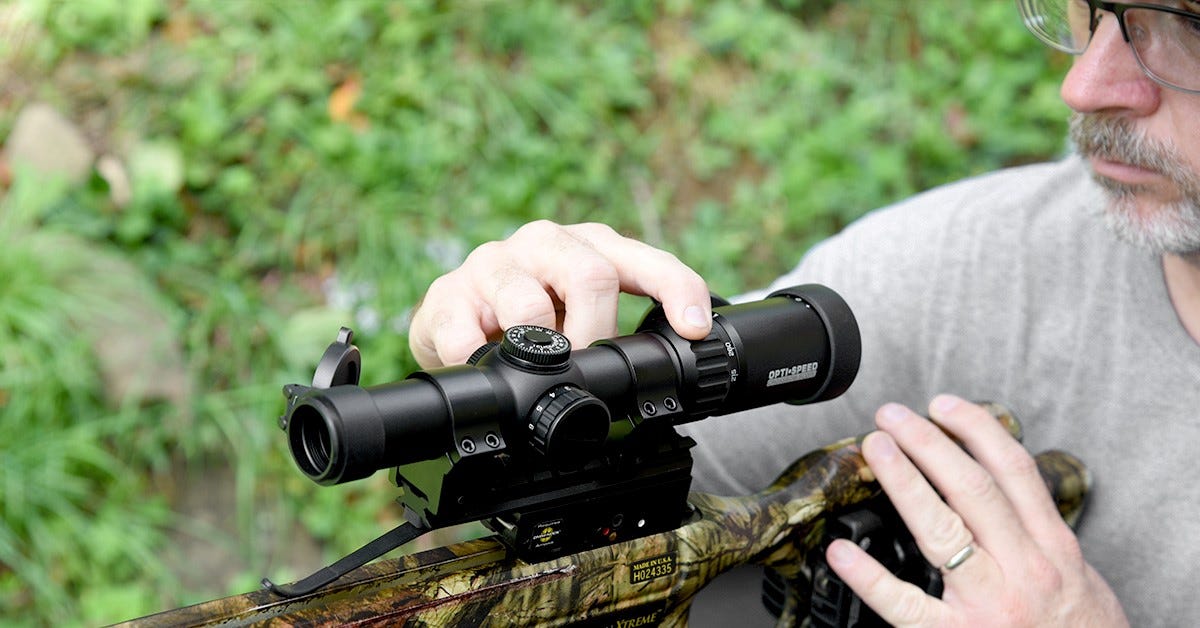
Adjusting the speed/magnification ring accounts for the variables induced by changes in crossbow speed and arrow weight. Zero the optic at 20 yards, and then adjust the speed/magnification until arrow point of impact matches the reticle subtensions across the functional hunting range of 20-40 yards.
Next, I replaced the field point with a new broadhead I wanted to test and double checked the POI at 20 yards. After some minor tweaking to the windage and elevation, I moved on to 30 yards and was pleased to see the Opti•Speed deliver a spot-on POI at both distances with the broadheads.
Moving on to 40 yards, my POI was a bit high. To compensate, I rotated the speed/magnification ring and found that a setting of around 265 fps put my broadheads right in the bullseye. I put a tick mark on the speed/magnification ring so it could be quickly adjusted should I need to shoot at that distance.
Now my Titan Xtreme is precisely dialed-in for the new arrow weight configuration across all my hunting distances. Should I change that setup again, perhaps by adding a heavier broadhead to further improve FOC performance, it will be a simple matter to achieve a new zero and compensate for the increased arrow drop.
That's the versatility of a variable-speed crossbow optic, something we highly recommend if you're looking to improve accuracy and penetration by moving to a faster crossbow and/or increasing arrow weight.