
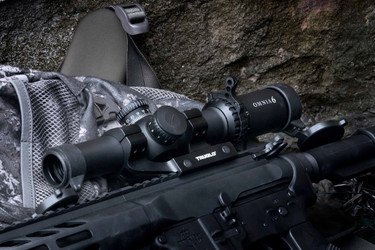
TRUGLO'S OMNIA EXPANDS BLACK RIFLE MISSION PARAMETERS
Feb 18th 2021
As most rifle enthusiasts know, the modern AR represents one of the most versatile firearm platforms there is. In lean and trim form, it is an exceptional defensive weapon for close to mid-distance encounters—highly portable and quickly deployable. Saddled with a premium barrel and a precision trigger, it gives cause for game to keep heads down at way, way out there distances.
This diversity has caused many an AR to be relegated to "designated for" status. In other words, "This is my long-range AR," and, "This is my 'clear the backyard at 2 a.m.' AR."
You get the picture. Many of you probably have multiple ARs with their own "designated for" status based on their build parameters.
One piece of equipment that most certainly puts an AR into a specific use category is the sighting system. Install a top-end long-range scope on your rig and it's doubtful this will be your go-to rifle for home defense. Put a red dot on it and you probably won't be taking it out to bust coyotes.
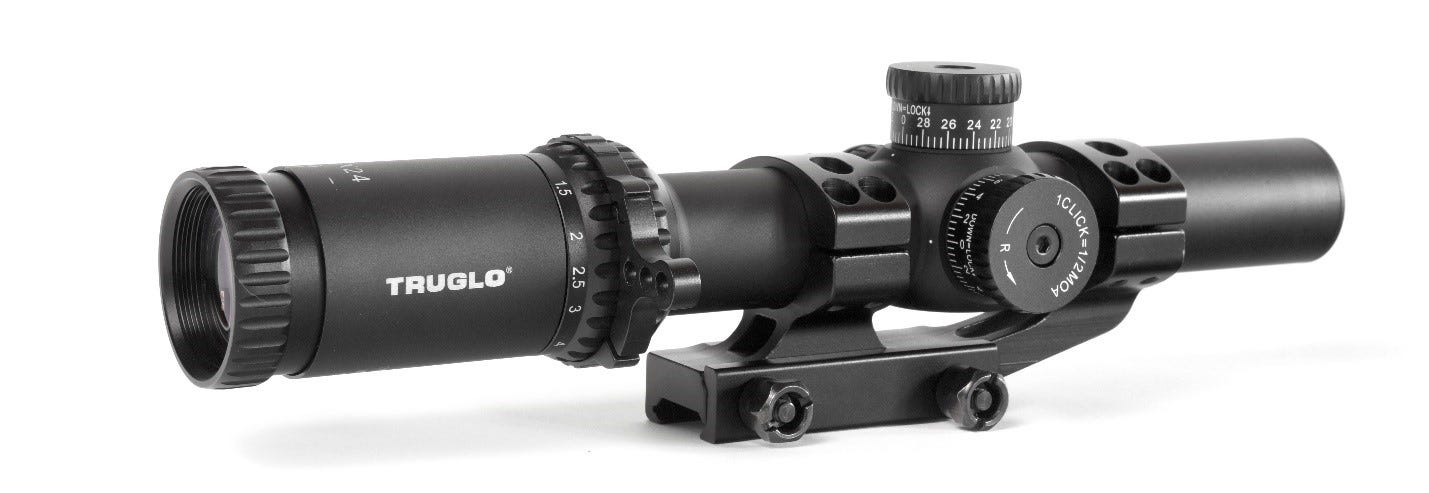
TRUGLO Omnia 1-6X rifle scope
In short, purpose-driven optics largely define the gun and its use. The thing is, a solid-performing, accuracy-enhanced AR can serve all functions quite admirably provided you have a sighting system that is equally as versatile as your rifle. After having worked with multiple optic systems for designated applications, many enthusiasts today are looking to get more out of their rifles by installing "bridge optics"—scopes that span the functional distance between CQB action and distant target shooting and varmint hunting.
Specifically, we're talking about lower magnification range rifle scopes such as the new Omnia by TRUGLO, Inc.
The idea behind the Omnia is to deliver a multi-application optic system that can serve as a near-field defensive sight—in the same spirit as a red dot—as well as a long-distance steel- or varmint-knocker.
The Omnia comes in two magnification ranges: 1-4X and 1-6X. Both include 24mm objective lenses and 30mm tubes, and both feature TRUGLO's All-Purpose Tactical Reticle (A.P.T.R.). It is the magnification and the dual-reticle combination that gives the Omnia its do-it-all skill sets, so let's start from the near in this discussion and then move to the far.
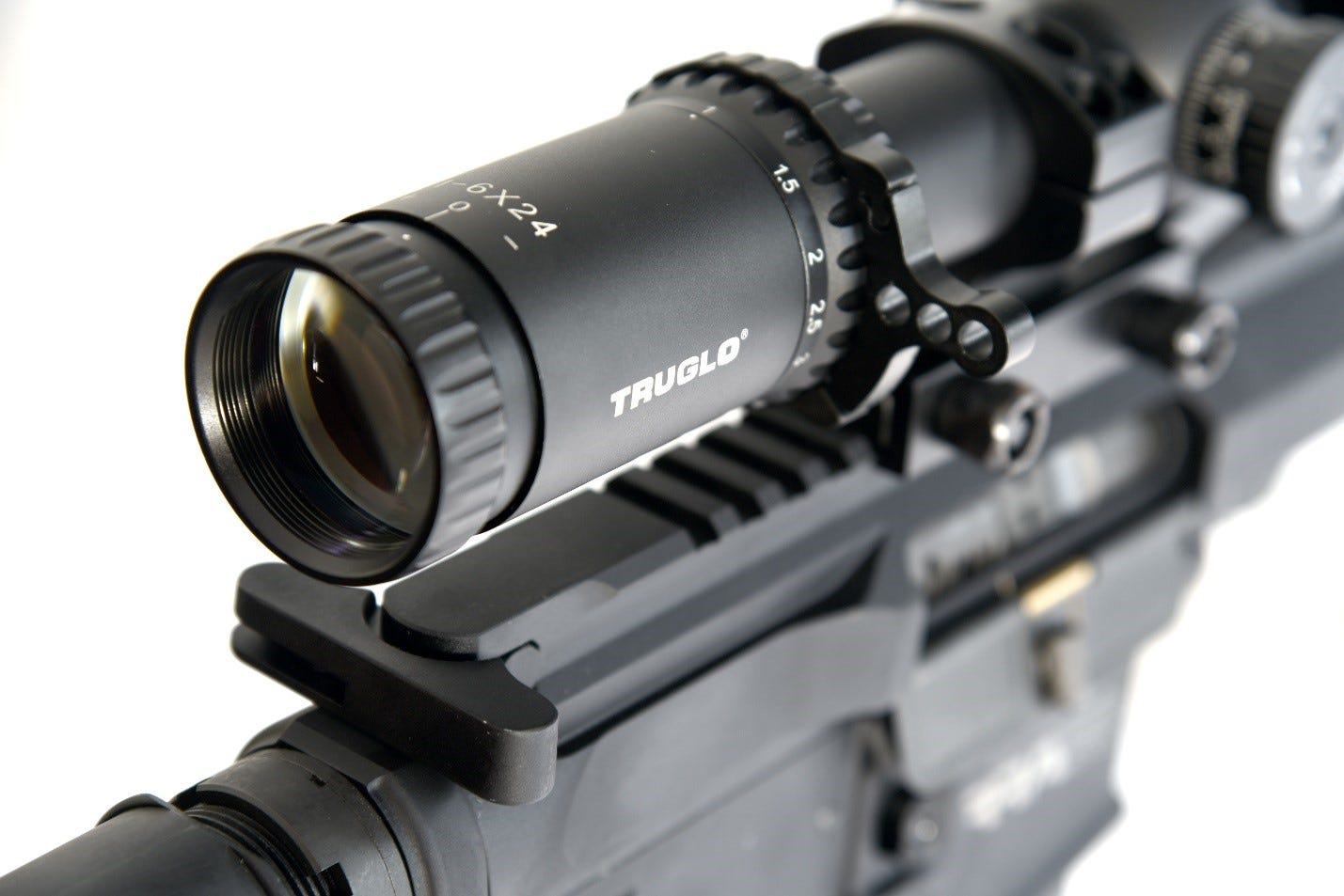
Dialed back to 1X, the Omnia offers what we'll call "naked vision." Simply stated, it's no magnification, or what you would see without optical assistance. That's what you get with most red dot optics, and it's exactly what you want for engaging targets at near distances. Once you have the scope mounted for your optimal eye relief and the magnification set to 1X, the Omnia performs much like any red dot would perform. Sight alignment comes easily and there's no need or tendency to close your subordinate eye like we often do when shooting at magnification. This allows you to obtain your sight picture while maintaining peripheral vision—critical aspects in a defense situation.
For aiming in the near-field range, the Omnia's A.P.T.R. reticle kicks in. This is a dual-type reticle that, for close-in work, features a large 12 MOA-diameter peep with a fine 1/4 MOA crosshair in the center. Both the peep and the crosshair can be illuminated with 11 available brightness settings. Since the reticle is glass-etched, it is visible with or without illumination to match your shooting conditions.
Although I had a "prove it to me" attitude when approaching the Omnia's CQB distance credentials, I was pleasantly surprised. After getting the eye relief set, I found I could achieve almost instant sight alignment once I hit my proper shoulder mount and cheek weld—no bobbing or head weaving required. The peep, unlighted or illuminated, is crisp and readily visible on the reticle field. It takes a little time to get used to the transition from a standard housing red dot to the long-tube Omnia, but once you do, sight alignment is right there when you need it. The peep is prominently visible whether illuminated or not and delivers quick centering on the target for fast-action shooting on CQB-range silhouettes. If you have a micro-fraction of a second more for sight alignment, the crosshair will tighten those shots even more.
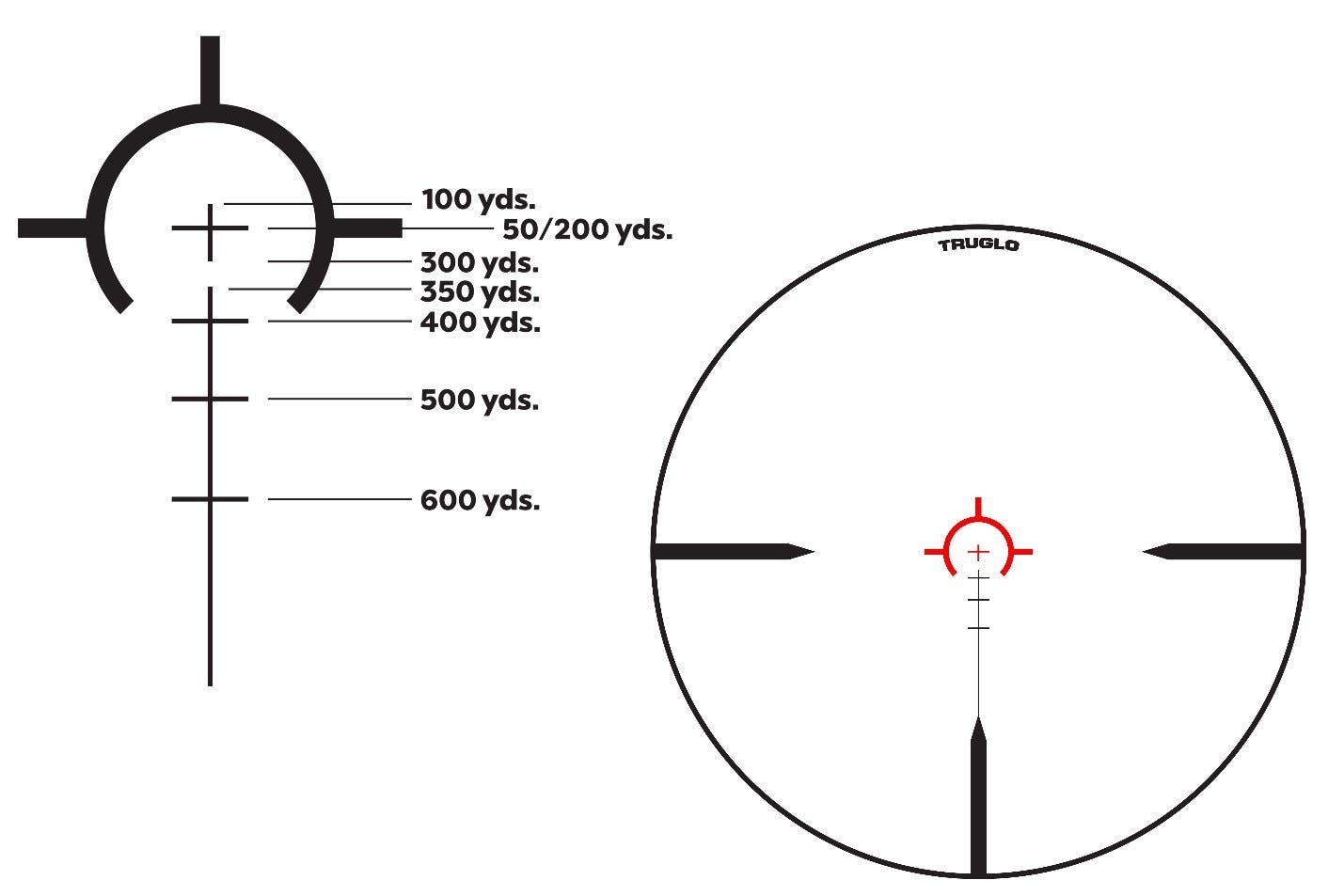
For transitioning to longer-range shooting, the Omnia also comes well-equipped. Here, the dual nature of the A.P.T.R. reticle becomes quite apparent. Tailing the peep is a bullet drop compensation reticle designed specifically for XM193 55gr. ball ammo. It is based on a 50/200-yard zero, with the subtensions providing point-of-impact out to 600 yards.
Since the Omnia is a second focal plane scope, the apparent reticle size stays the same size as the magnification increases. Therefore, the MOA subtension measurements are most accurate at the maximum 4X or 6X magnification, whichever is highest for the scope model. This is true, of course, for all second focal plane optics, and another reason why the lower-power optics such as the Omnia do well on a crossover rifle platform like the AR.
A 6X scope, for example, can cover a whole lot of shooting range without the need for calculating bullet drop. By contrast, a 9X or 12X magnification on a BDC reticle scope (second focal plane) is often too much power for quick target acquisition on, say, an incoming coyote (depending on the distance). Factor in bullet drop calculations if you need to dial back that higher-power scope and now things are getting a bit complicated for a fast-paced shooting scenario. A lower power scope with a second focal plane reticle, on the other hand, gives you good target acquisition at the highest magnification across a broad range of distance with no need to fudge around with math. When you need to use the BDC reticle for drop compensation (beyond the 200-yard zero), you're going to be dialed up to the highest magnification anyway. At CQB distances, however, with the magnification reduced, the reticle remains at its effective size (not diminished, as would be the case with a first focal plane reticle scope). Here, speed versus precision is what counts. Also, the simpler second focal plane design offers better quality and optical clarity for scopes in this price range.
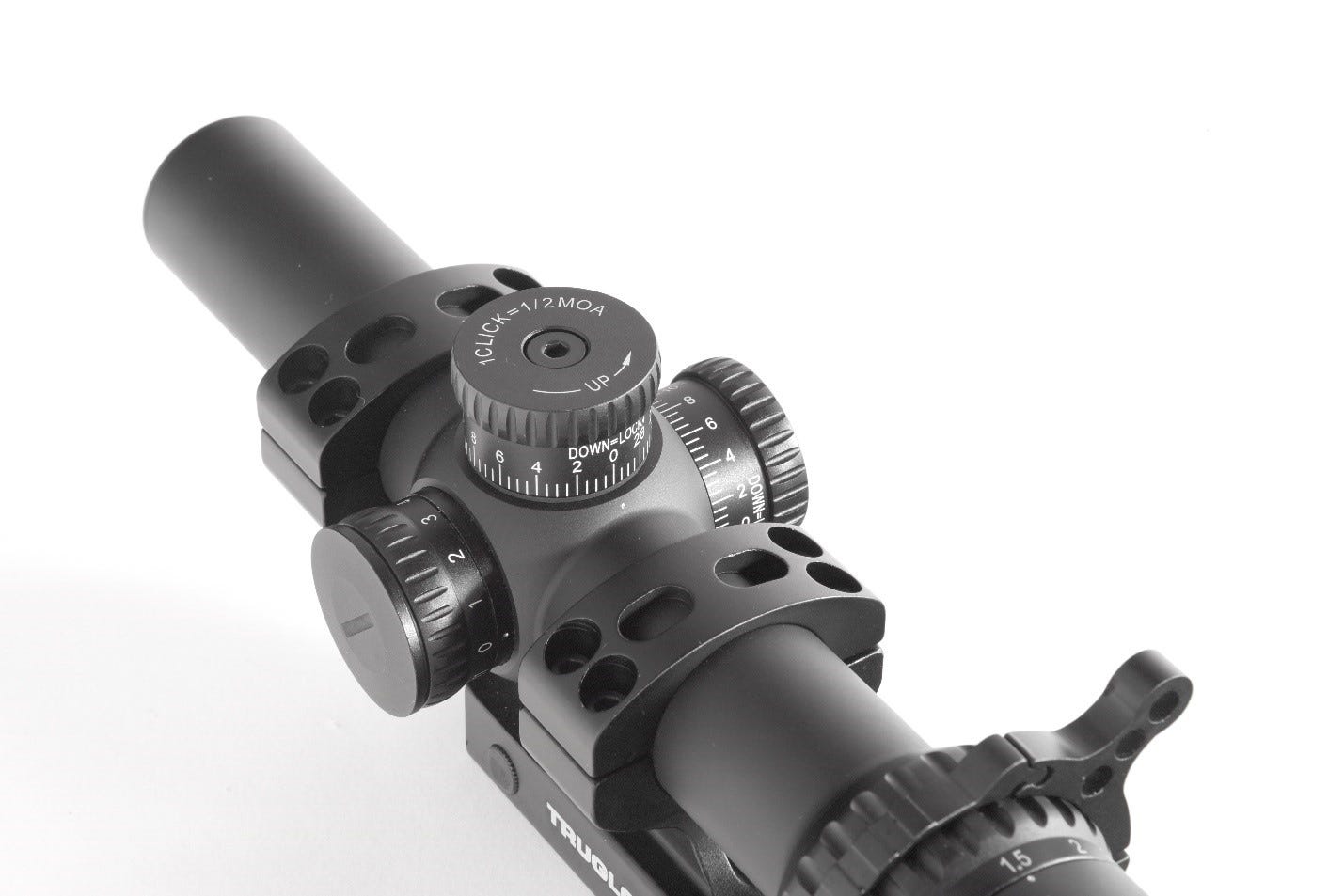
When speed is not of the essence, the Omnia stands ready to allow you to dial in for precision shooting thanks to its locking exposed target turrets. Once the scope is zeroed, you can index the elevation and windage caps back to "0" and lock them down. Precise bullet drop and wind drift can then easily be dialed in at 1/2 MOA per click for a specific shot setup and then quickly returned to the original zero.
Going back to the first vs second focal plane discussion for a moment, the Omnia's SFP reticle offers what I consider to be a distinct advantage over the FFP reticles that are increasingly popular on long-range scopes. Since the Omnia's SFP reticle size doesn't change with magnification (as opposed to FFP reticles, which appears magnify along with the scope's magnification), the reticle appears smaller against the target, offering more precise aiming.
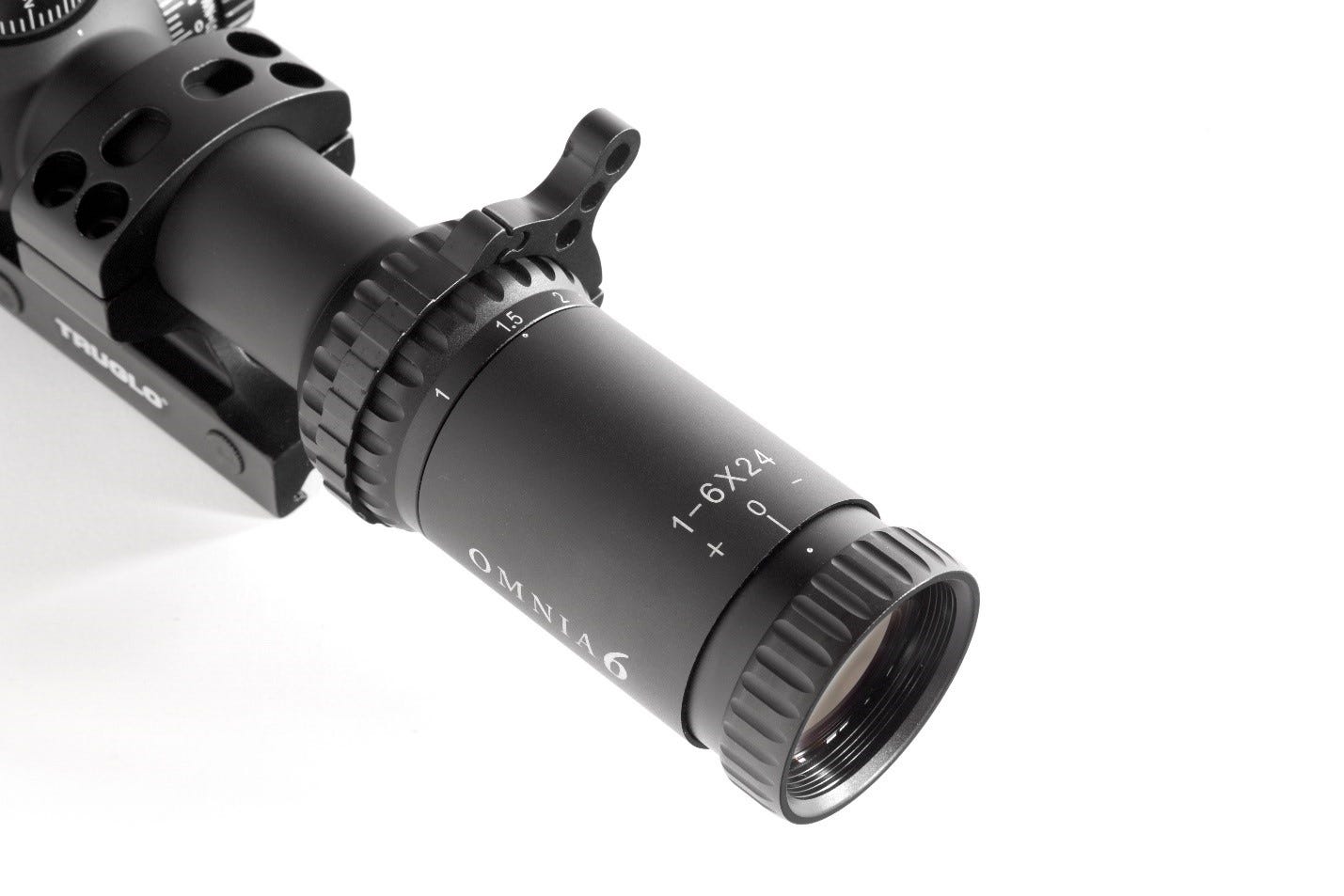
Overall, operation of the Omnia scope is as simple as you'd want for a multi-scenario optic. An adjustable diopter brings the reticle into sharp focus, and there is no parallax adjustment since the scope is fixed-focus at 100 meters. An aggressively-ribbed magnification ring makes adjustment easy, and a quick-focus lever that secures around the ring is included to provide simple one-finger operation. The illumination dial is located on the left side of the scope, with detents for each of the 12 settings (off plus 11 illumination levels). Its two-way rotation allows you to go from "off" to "1" or "11" illumination (lowest to highest, respectively) without having to spin the dial completely around. Again, fast and simple.
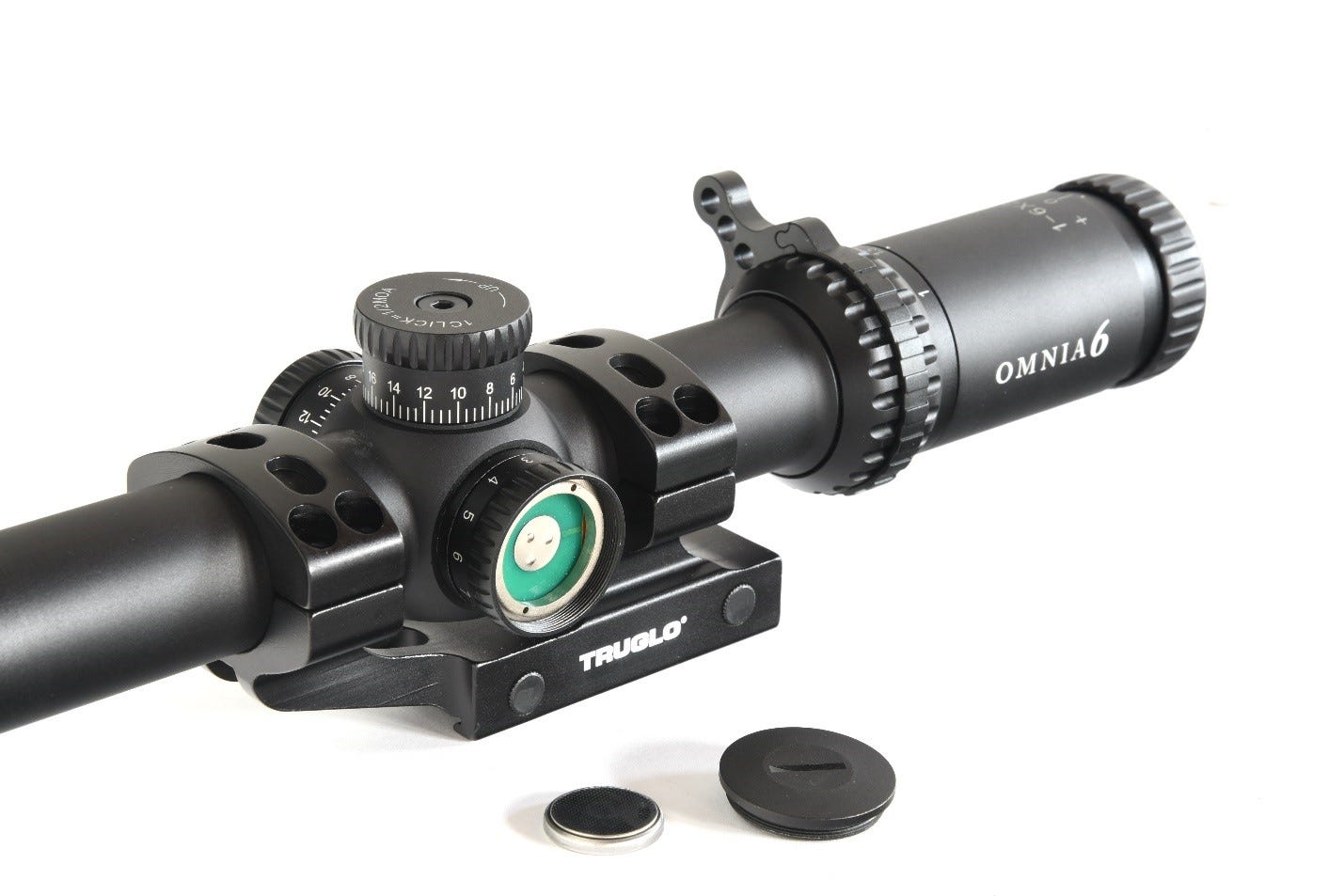
Also included with the Omnia is 30mm machined aluminum mount. It's a robust design that fits any flattop receiver with Picatinny rails.
Overall, the Omnia 1-6X scope proves itself to be a functional and reliable optic that closes the distance between fast-action short-range and precision longer-range shooting. Being guilty myself of running "designated for" ARs, I found it quite refreshing to take one rifle to the range that could provide CQB practice as well as long-range steel fun.
If you would like to liberate some of your ARs, you may also want to give a low-magnification optic like the TRUGLO Omnia a shot. With a street price of around $300, give or take, you might find it an easy buy for getting more use out of your AR investment.
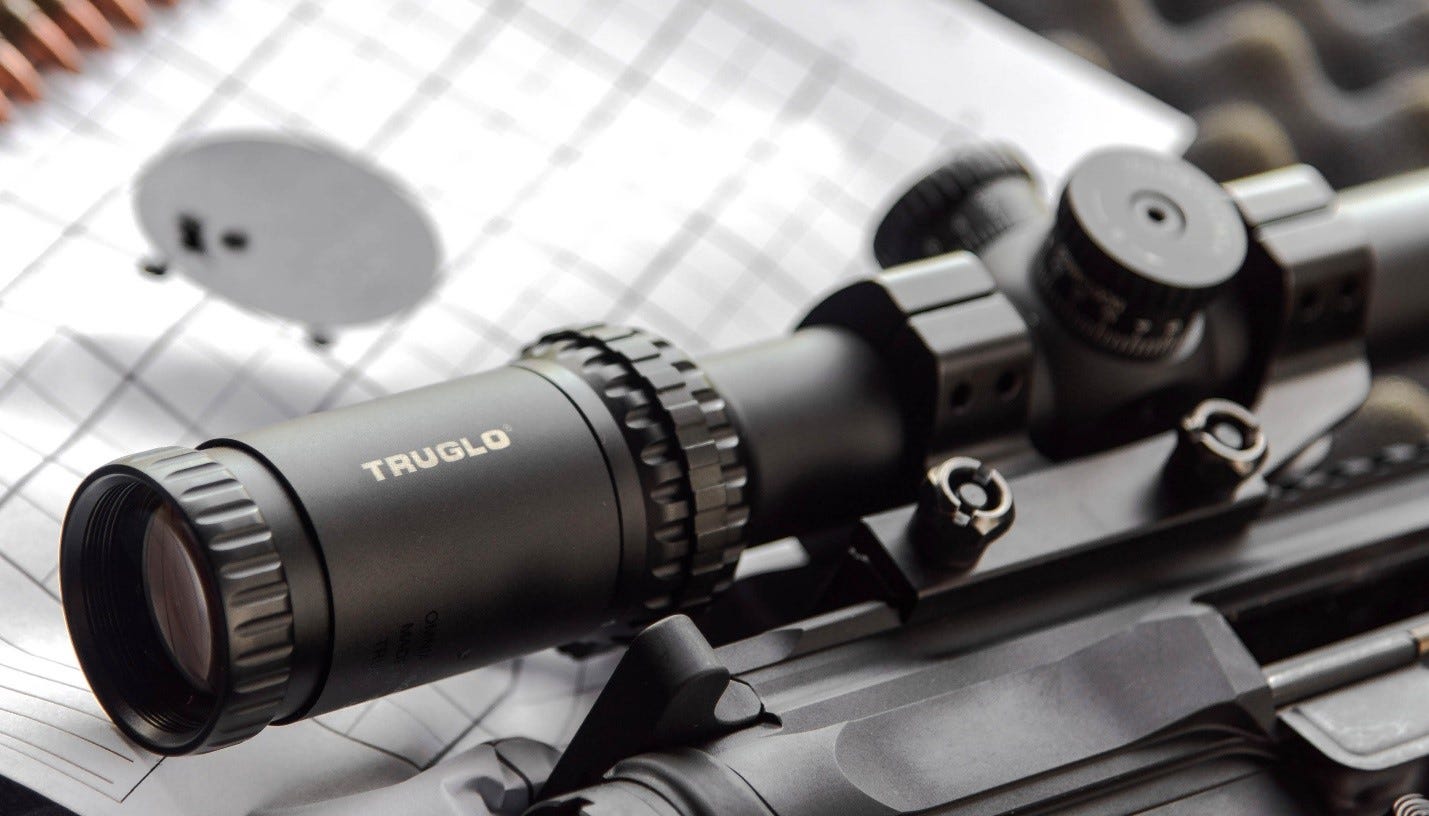
SPECIFICATIONS: TRUGLO Omnia 1-6X Scope (model #TG8516TLR)
1-6X magnification
24mm objective lens
Second focal plane
Fixed focus
30mm tube
Hard-coat anodized matte black finish
Illuminated glass-etched A.P.T.R. reticle
1/2-MOA locking target turrets
Multi-coated lenses
Nitrogen gas-filled, fog-proof construction
Water-resistant
Shock-resistant
Included APTUS-M1 mount for Picatinny rail
Lifetime Limited Warranty