
Proper Setup For Your Turkey Gun
Posted by Heath Wood on Apr 1st 2022
Get Ready For Turkey Hunting
Spring is here, so it is time to start thinking about turkey hunting unless you never stopped thinking about it from the previous season. Whether turkeys are always on the brain or only come to the forefront of your thoughts when the season approaches, it is imperative to have your turkey gun performing in perfect order.
A few years ago, while hunting near my home in southern Missouri, I had the unfortunate experience of missing a turkey on the first and the second day of the spring season. At first, I made excuses for why I missed, convincing myself that I simply messed up both shots. On the third day of the season, I got on a turkey near a grassy power line. I finally had the proper setup and sat on the edge of the power line with the gobbler down over the hill, barely out of sight. After a few soft calls, the gobbler was strutting into the grassy opening at a mere thirty-five yards. When the strutting tom made it to the twenty-five-yard mark, I squeezed the trigger on my twelve-gauge shotgun. Again, the turkey flew off after. Three strikes and I was bewildered, confused, and out.
A week before the season opener, I had shot my gun one time at a target at thirty yards. The gun patterned perfectly and was ready to hunt. After the third miss in three hunting days, I concluded that it wasn't me or bad luck; something was wrong with my shooting equipment. After investigating all my equipment, including my gun, the sights, and ammo, I didn't see any problems until I took the gun back to the range and shot it a few more times. Although the gun patterned well, the first, second, third, and fourth shots were nothing alike. My shot pattern was all over the place, thus being why I had missed three turkeys in a few short days.
Having an excellent operating shotgun is vital to being successful when turkey hunting. If a gun is not shooting correctly, it is common for a hunter to miss turkeys, as in my experience. In the worst-case scenario, a hunter could wound a turkey or fatally injure it without the hunter ever finding it. Making a poor shot usually occurs when the pattern of the hunter's pellets does not open properly, causing the pellets to be unlethal after a certain distance. Follow the tips below to ensure that the gun and equipment are working correctly.
Choosing the Right Load
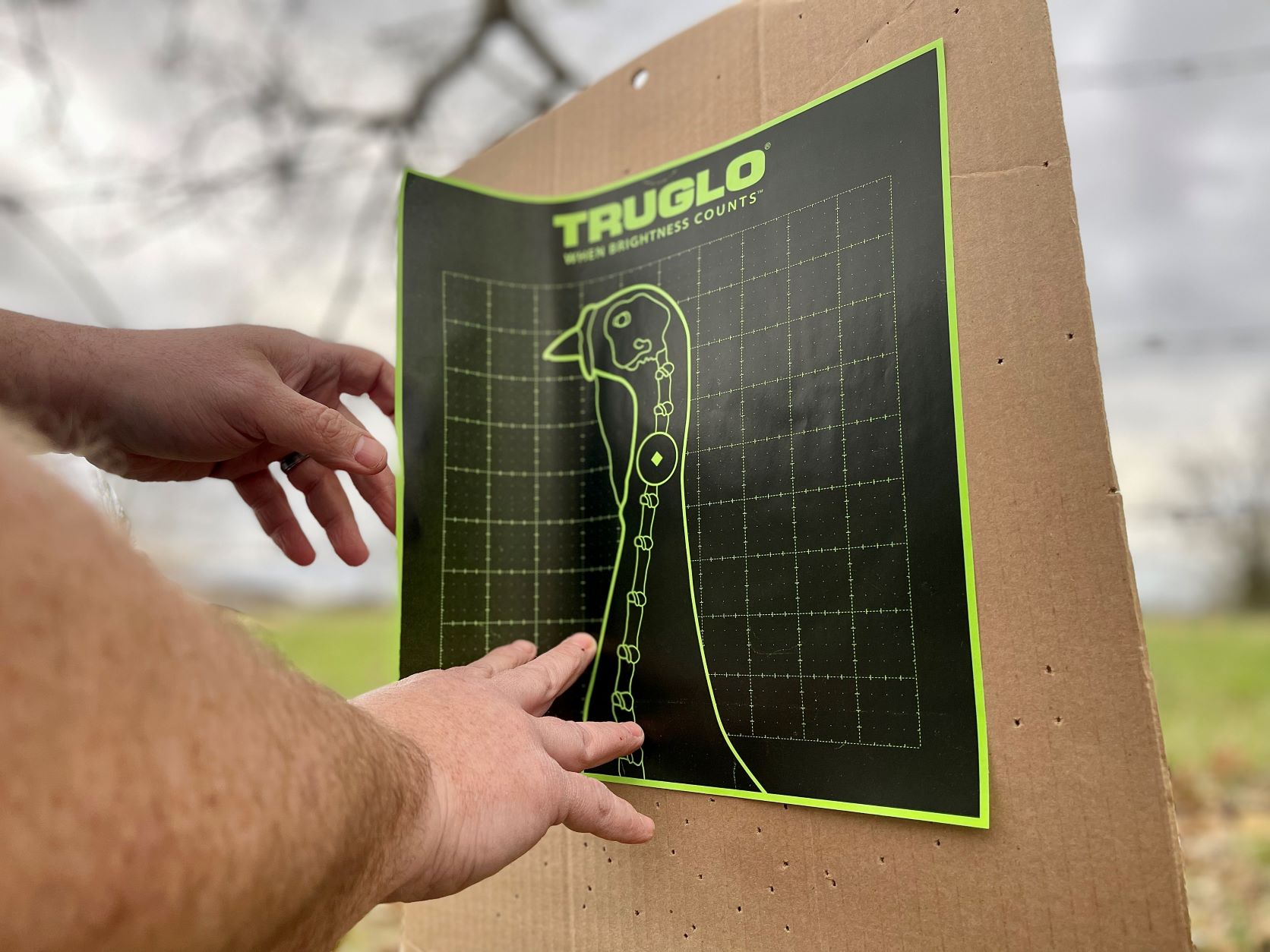
One of the first steps to a properly shooting firearm is ensuring that the gun is paired with the best shooting load. It is important to note that all firearms shoot differently, and each has its specific load that shoots the best pattern.
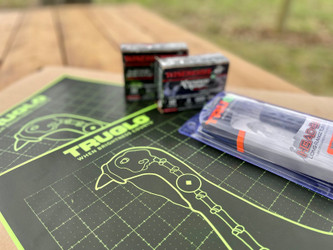
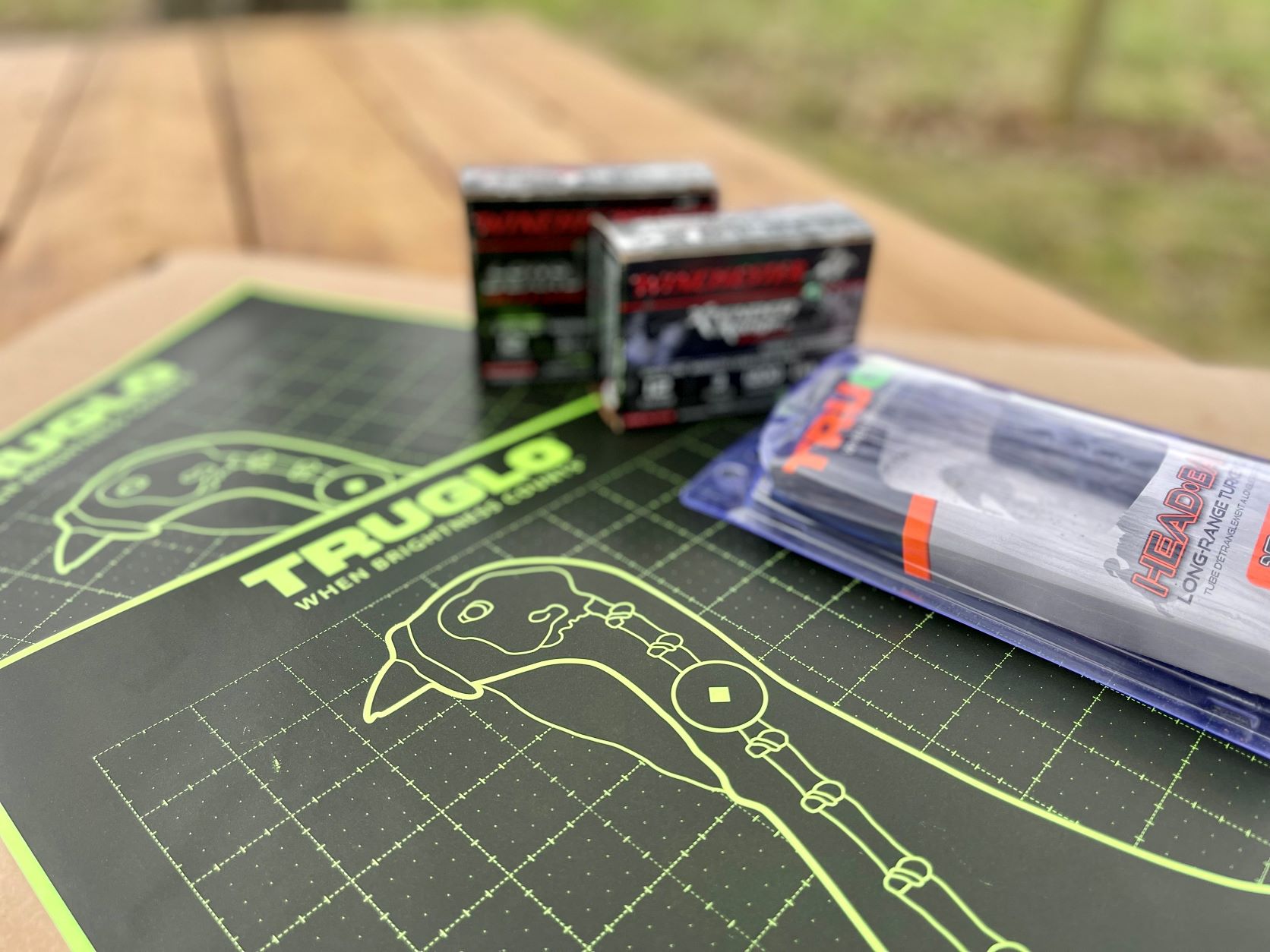
To find out which load performs the best out of the hunter's gun, they must first shoot several different types of loads at a real-sized turkey target, such as the TruGlo Tru-SEE Turkey Targets that display the actual size of a turkey's head and all their vitals. For example, a hunter should shoot 3" and 3 ½" shells to see which one patterns the best out of their gun. Next, they should try different size loads, such as #4's, #5's, and #6's, to see which pattern is the best.
When finding the proper load of a shotgun shell, it is vital to shoot three to four times with each load and at several different yardages. Shooting different loads at ten, twenty, thirty, and forty yards can certify consistent deadly patterns to a turkey while hunting. When the hunters find the best shooting load, they are ready to hunt.
Note: To achieve a better shot pattern, use a high-performance choke tube such as the TruGlo Headbanger Choke Tube. A quality choke tube can help the hunter's shot pattern be lethal at further distances and can help produce a tight and consistent pattern, shot after shot.
Sights and Optics
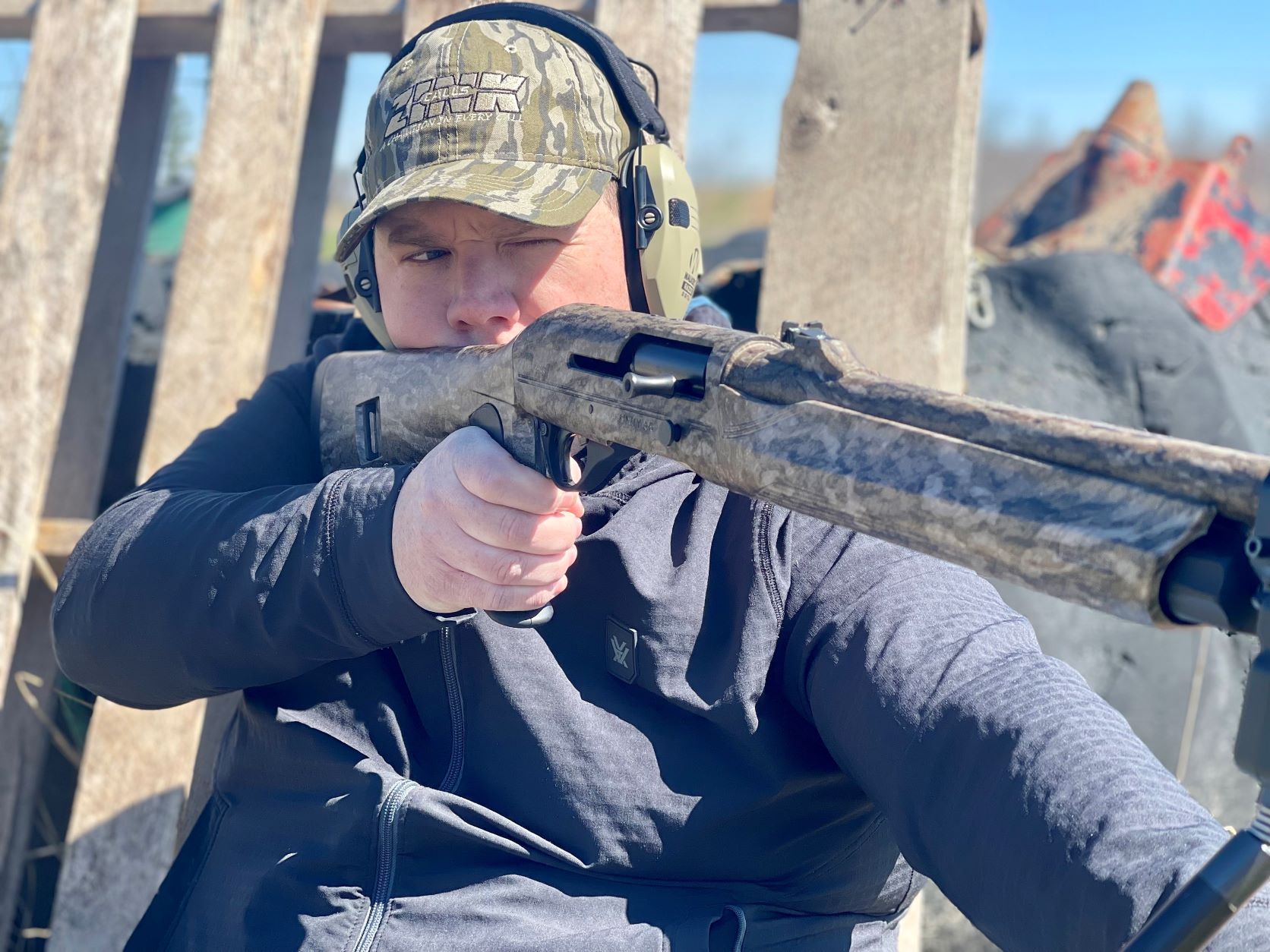
A common shooting mistake made by many turkey hunters is not having the proper sights or optics on their shotgun. If the hunter's gun has been patterned on the range and is shooting correctly yet, the hunter still has problems making the shot while hunting; the next option is to get better sights or optics made specifically for turkey hunting.
Some hunters have a problem seeing the turkey and their sights simultaneously to make a deadly shot. To help identify the turkey in the sights while hunting, hunters can use a more lighted version of sight, such as the TruGlo Magnum Gobble-Dot Sight. The Gobble-Dot sight is made of fiber optics that give off a bright green color on each side of the back sight and then a bead on the front sight to maintain proper balance and alignment when aiming at a turkey.
If the hunter has a problem staying down on the gun when aiming at the turkey, they may want to try optics such as the TruGlo Gobble-Stopper Turkey Sight. The Gobbler-Stopper is a scope-style shotgun sight that is ideal for the hunter who makes the mistake of raising their head away from the gun when taking the shot. Many turkey hunters are guilty of wanting to look at what the gobbler is doing instead of staying aligned looking down the gun barrel. The Gobbler-Stopper requires the hunter to look through the scope to find the dot and then place that dot on a turkey's head, ensuring that they are always down on the gun.