
The Art of Aggressive Calls and Tactics During Breeding Season
Posted by Heath Wood on Feb 21st 2024
As the breeding season for coyotes approaches, hunters often find themselves presented with a unique opportunity. Understanding the behaviors and tendencies of these mysterious creatures during this time can significantly enhance the success of a hunt. For me, the breeding season has been one of the most prosperous times for coyotes responding to my calls and luring them into close range. One of the reasons the breeding season is prime time for coyote hunting can be measured by the success obtained when using aggressive sounds on my electronic caller and more hard-hitting yet compelling tactics that maximize my chances of a successful hunt.
Why Breeding Season
Breeding season, typically from late winter to early spring, is an optimal time for hunting coyotes for several reasons. Firstly, coyotes become more active during this period as they search for mates and establish territories. This increased activity makes them more susceptible to calls and lures. Additionally, the instinctual drive to protect their territories and potential mates can make them more responsive to aggressive calls, making it easier for hunters to draw them in.
Coyotes are typically most active during the breeding season in the early morning and late evening during daylight hours and throughout the night. This is when they will most likely engage in hunting, mating rituals, and territorial marking. As such, these times are ideal for hunters to set up and call coyotes effectively.
Are Coyotes More Aggressive During Breeding Season
Yes, coyotes tend to be more aggressive during the breeding season. The competition for mates and areas heightens their territorial instincts, increasing aggression towards intruders, including other coyotes and potential threats. This heightened aggression can work to the advantage of hunters, making coyotes more responsive to aggressive calls and tactics.
While hunting in late February, my wife decided to tag along while on an evening calling stand. One of my first sound selections was a coyote bark, followed by a challenging howl. Both sounds would be considered more aggressive sounds. A few seconds after the challenge howl sequence had been playing, I caught the background noise of a coyote answering back to my call. After I paused my remote, I glanced at my wife to see her reaction to the fired-up coyote. Soon, she realized the aggressive barking and sharp, short bursts of howls were not coming from our call. To build the excitement more, she caught the coyote's movement, sprinting towards our direction. After losing sight of him for a short stint, he soon peaked at the bottom of a hill, moments after he had crossed a dried creek bed that separated another field from the open area where we had set up. I made a successful shot with my .22-250 rifle to finish off one of the most adrenaline-rushed sits we had ever witnessed. It is incredible what jealousy and aggression will do when a male coyote thinks another coyote is in the area close to his female, who is ready to breed.
Aggressive Sounds & Tactics for Calling Breeding Coyotes
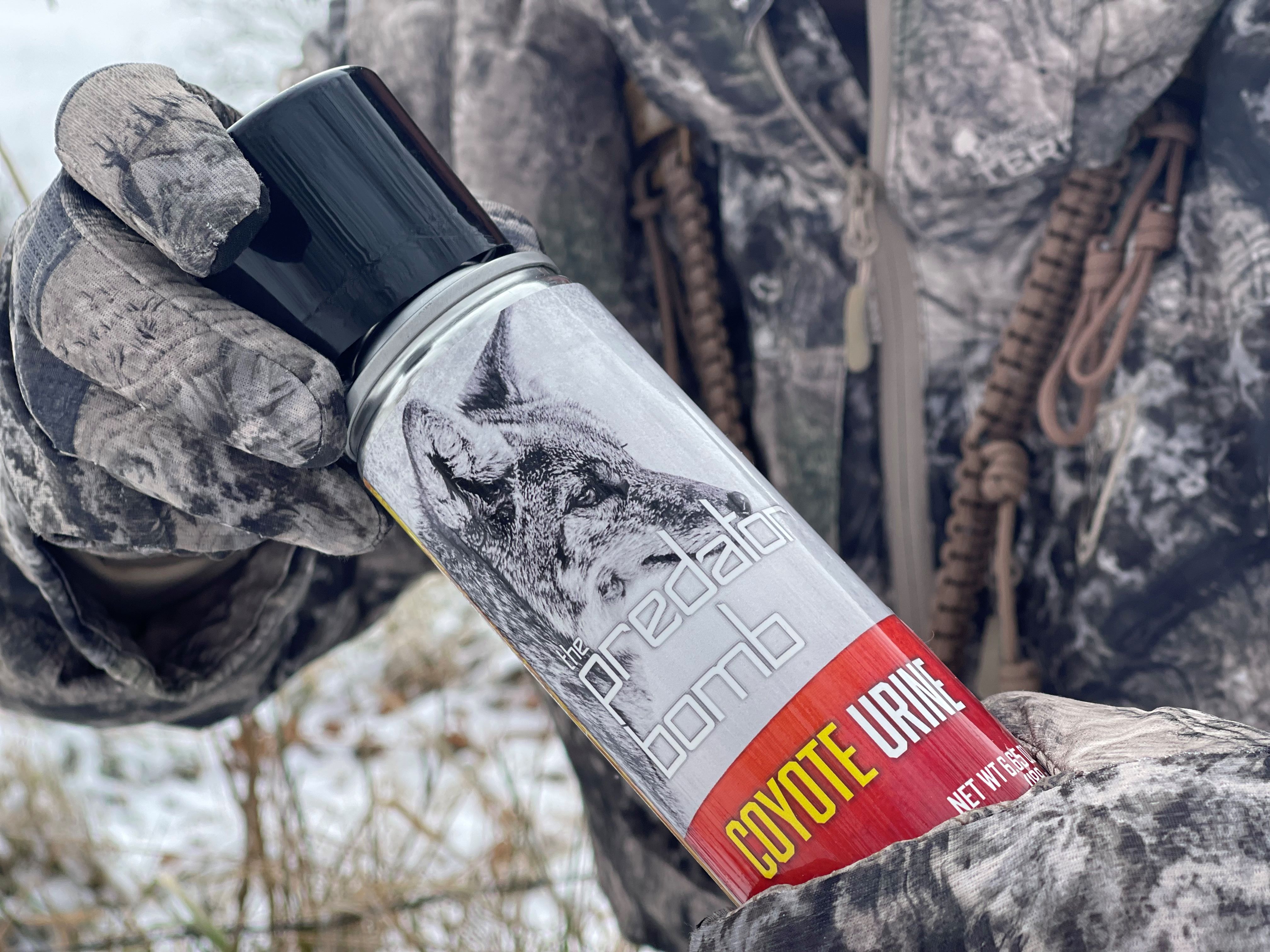
When calling breeding coyotes into close range, utilizing aggressive sounds, such as on our hunt, can be highly effective. Challenge howls, whimpers, barks, and howls are all excellent choices for imitating the sounds of rival coyotes or potential threats. These sounds trigger the territorial instincts of breeding coyotes, enticing them to investigate and potentially confront the perceived intruder. In addition to aggressive calls, hunters can employ various tactics to maximize their success during the breeding season. Setting up decoys such as injured prey or rival coyotes can attract curious coyotes within range. Utilizing scent lures, such as Buck Bomb Coyote Urine, helps mimic the presence of other coyotes and can also enhance the effectiveness of calls and decoys.
Coyote Aggression at Night
While coyotes are generally more active at night throughout the year, their aggression during the breeding season may further intensify after dark. Under the cover of darkness, coyotes may feel emboldened to defend their territories more aggressively, making nighttime hunts particularly fruitful during this time. When setting up after dark, one of my favorite setups includes hunting with a partner. One of us will use a scanning light such as the Coyote Light Pro LED Light, while the other will use a rifle equipped with the TruGlo Weapon Spotlight Kit. The first sound played typically consists of a female howl, followed by a challenge howl. Always keep your lights scanning because coyotes can often respond within the first minute of calling. I play a distress sound like a rabbit or rodent as a follow-up if nothing responds after two or three minutes. After seven or eight minutes of off-and-on playing of distress sounds, I then revert to a challenging howl or coyote bark. Again, these aggressive coyote vocals resemble jealousy when another male enters a coyote’s area, enticing others to check out the fight.
Breeding season presents the prime opportunity for hunters to target coyotes, capitalizing on their increased activity and heightened aggression. By understanding the behaviors and instincts driving coyotes during this time, hunters can effectively utilize aggressive calls, tactics, and strategies to enhance their chances of a successful hunt. With the right approach and preparation, the breeding season can be the ultimate time to pursue these elusive predators in the wild.